
Augmented Reality in 2026: Making Digital Information Useful in the Real World
Augmented reality is becoming more practical in 2026, helping businesses improve product discovery, training, planning and customer engagement by placing useful digital information into real-world settings.
Augmented Reality in 2026: Making Digital Information Useful in the Real World
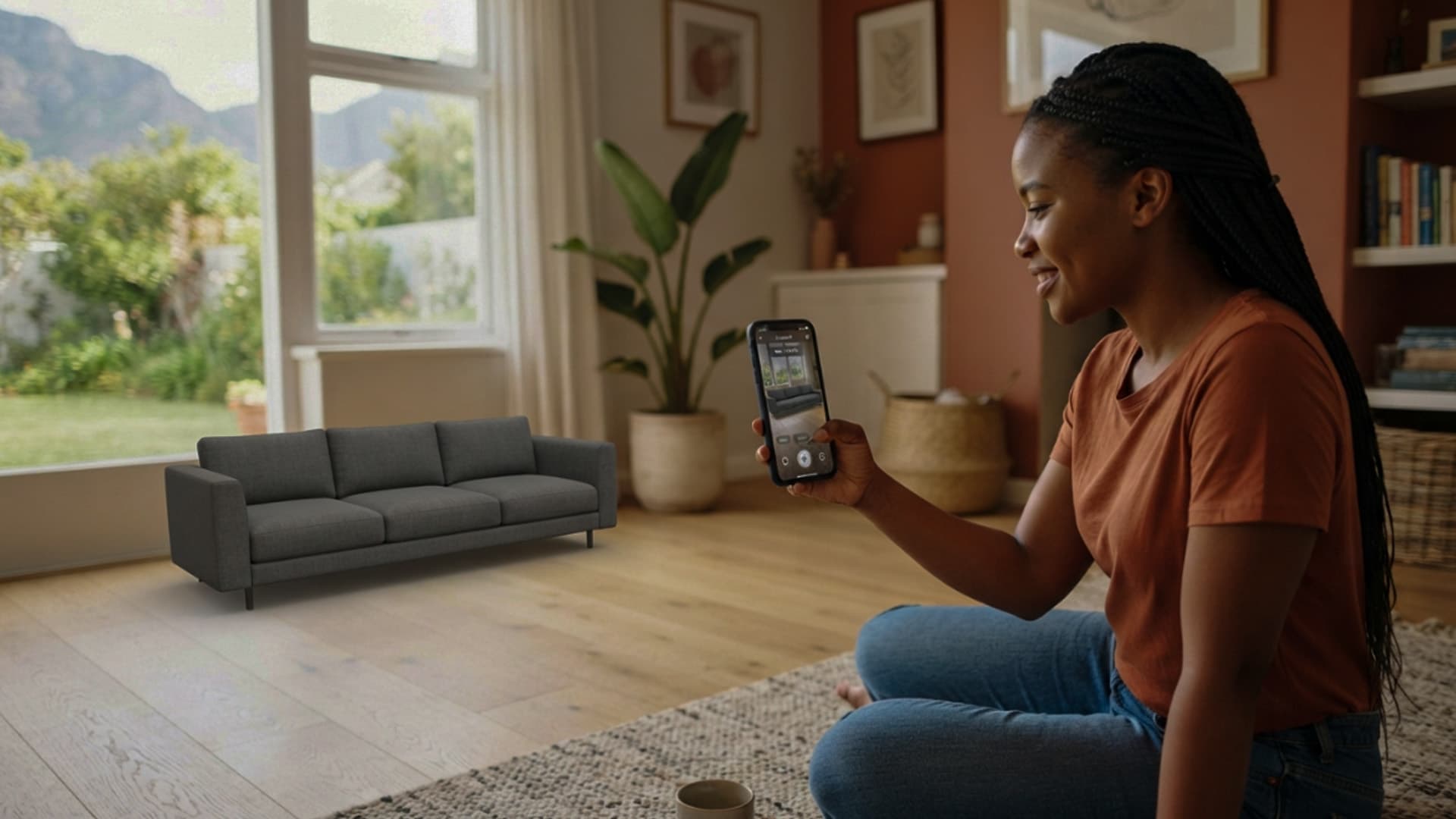
Augmented reality has become one of the most practical ways to connect digital information with everyday environments. Instead of moving people completely into a virtual world, AR adds useful digital content to what they can already see. A customer can preview furniture in a room, a technician can view instructions next to equipment, or a visitor can use a phone to discover extra information about a product, place or display.
This makes AR different from technology that asks people to leave their normal surroundings behind. It works with the real world rather than replacing it. The experience can happen through a smartphone, tablet, smart glasses or a mixed reality headset, depending on what the user needs to do.
In 2026, AR is becoming less about adding visual effects for their own sake. Businesses are increasingly looking for applications that save time, reduce uncertainty or make a product easier to understand. The strongest AR experiences are simple, relevant and connected to a real task.
For organisations in Johannesburg and across South Africa, this creates opportunities in retail, property, automotive, education, tourism, events and technical services. The technology does not need to be complicated to be useful. A well-designed AR experience can help people make better decisions because it gives them more context at the moment they need it.
AR Helps Customers See Before They Decide
Many customer decisions depend on visual confidence. A person may like a product online but still wonder whether it will fit in their home, match their existing space or work in the way they expect. Images and product descriptions can help, but they do not always answer those questions.
Augmented reality can reduce that uncertainty by placing a digital version of a product into a real environment. A customer can use a phone to see how a chair may look in a living room, how a paint colour could change a wall or how a large appliance may fit into a kitchen.
This is useful because it moves the product closer to the customer’s real situation. Instead of imagining the result, they can view it in context and explore it from different angles.
Product Visualisation That Feels Relevant
AR product visualisation works best when it is accurate and easy to use. The customer should be able to launch the experience quickly, place the item naturally and understand what they are seeing without needing technical instructions.
For retailers, this can create a more useful online shopping journey. It can help customers compare options, understand scale and feel more confident before making a purchase. For physical stores, AR can add another layer to the showroom experience by allowing visitors to explore colours, variations or product features that are not available on the floor.
The purpose is not to replace the real product. Physical interaction remains important, especially for items where material, comfort or build quality matter. AR can help customers narrow their choices and arrive at that physical interaction with better information.
Better Product Stories in Retail and Events
A product may have features that are difficult to show through packaging or signage. AR can reveal those details in a more engaging way. A customer can scan a display and see how an item works, view a short animation or access guidance that explains the benefit in simple terms.
At an event, AR can turn a printed display into an interactive story. Visitors can scan a product image, explore a 3D model or view an animation connected to the campaign. This can help brands create a more memorable interaction without needing to build a large physical installation.
The content should always support the product story. If the AR experience is entertaining but unrelated to the item being promoted, it may attract attention without helping customers understand why the product matters.

AR Is Improving Training and Workplace Guidance
Workplace training often depends on people being able to understand instructions while standing in front of real equipment, tools or environments. Manuals, diagrams and videos can be useful, but they require workers to look away from the task and translate information into action.
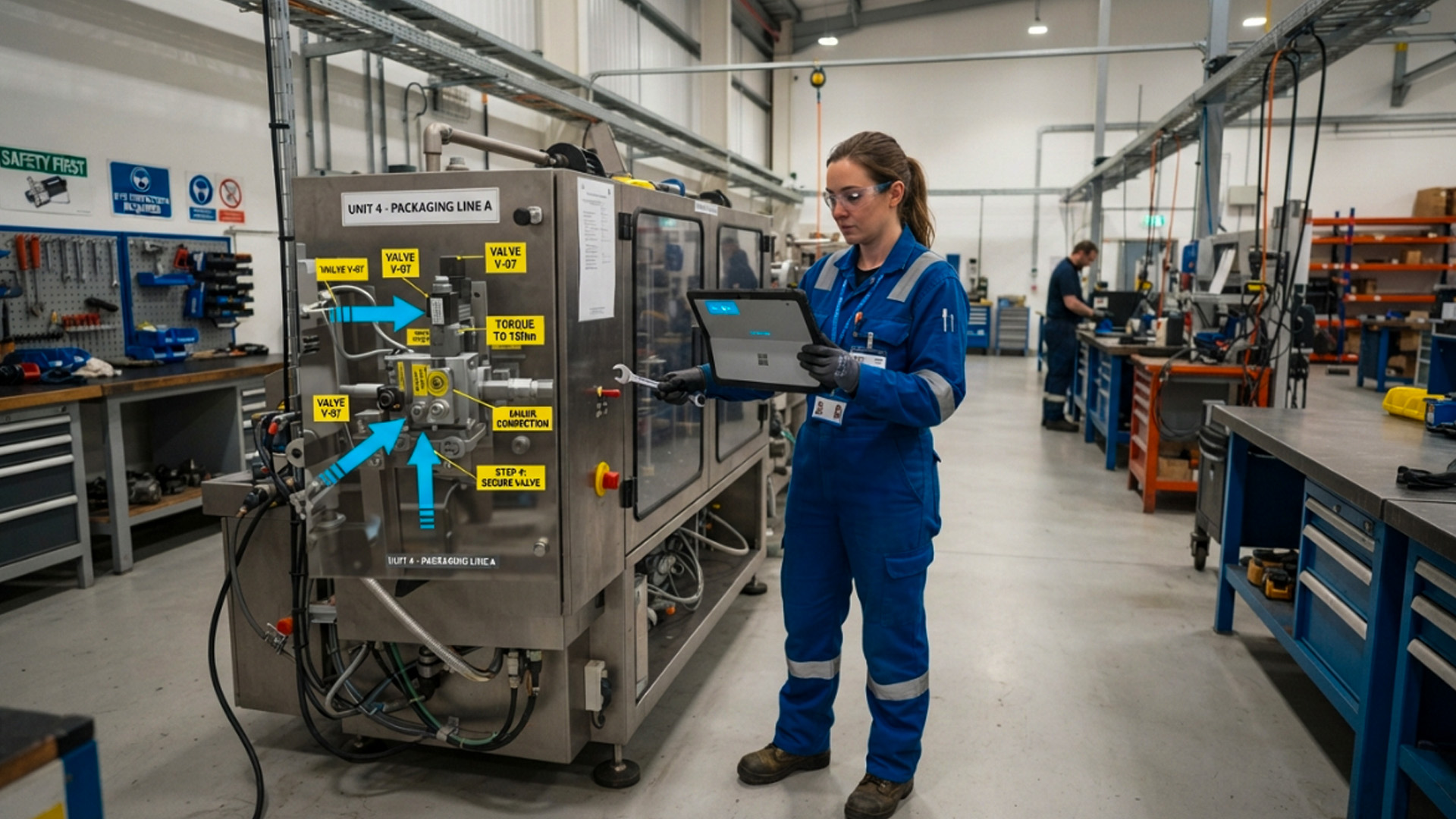
AR can bring that information closer to the work itself. A technician can view a digital guide next to a component. A learner can follow step-by-step prompts while practising a procedure. A supervisor can use visual overlays to explain a layout, safety requirement or maintenance task.
This is particularly useful when accuracy matters and when workers need to build confidence before completing a task independently. AR does not replace training, supervision or safety rules. It can make those processes easier to understand and easier to repeat.
Instructions at the Point of Work
The value of AR workplace guidance comes from timing. Information is most useful when it appears at the point where a person needs to make a decision or complete an action.
For example, a maintenance worker may need to identify the correct panel before beginning a repair. An AR guide can highlight the area, show the order of steps and remind the worker of important checks. A warehouse employee may use an AR-enabled device to locate an item or confirm that an order has been packed correctly.
The experience should be designed to reduce friction, not create it. Instructions need to be clear, readable and limited to what is useful at that moment. Too many labels, alerts or visual effects can distract from the task and make the system harder to trust.
Safer Practice for New Skills
AR can also support learners before they work in more demanding environments. A technical student can use a tablet or headset to identify equipment, understand safe zones and follow a guided process. This gives them a chance to build familiarity before they are expected to work with real tools or machinery.
The technology is especially valuable when access to equipment is limited or when a group of learners needs consistent instruction. Each person can receive the same visual guidance, repeat the activity and ask for support when needed.
Educators and trainers remain central to the process. They can explain why a step matters, correct misunderstandings and assess whether learners are ready to apply the skill in a real setting.
AR Gives Property and Design Teams More Context
Property, architecture and interior design are built around visualising spaces before they are complete. Clients often need to make decisions from floor plans, renders and material samples, even though the final environment may still be months away from completion.
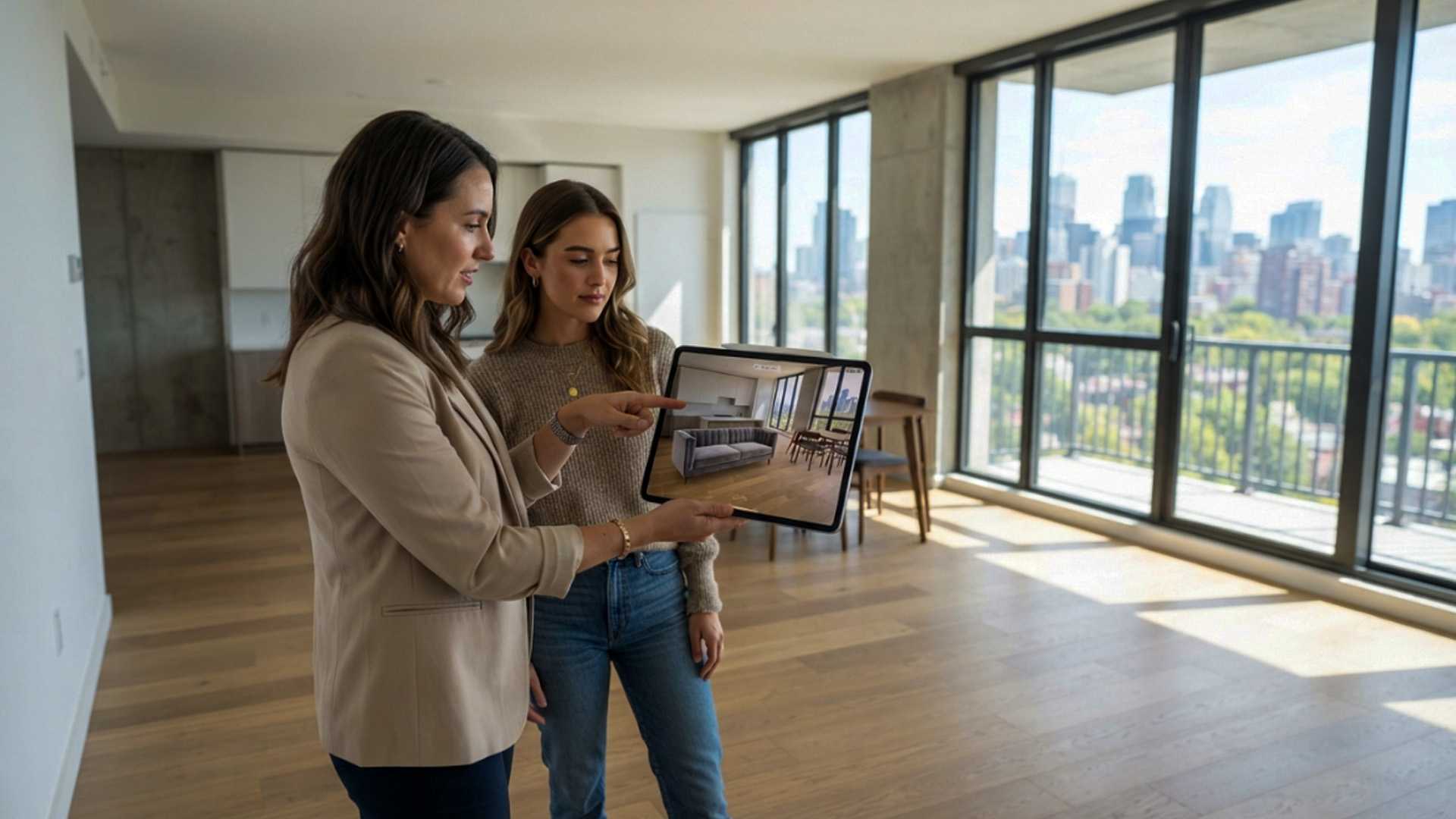
Augmented reality can make those conversations easier by placing digital elements into a real space. A designer can show how furniture may fit into a room. A developer can help buyers visualise an apartment layout. An architect can review a proposed structure at scale before construction begins.
This does not replace detailed technical drawings or physical site inspections. It gives stakeholders another way to understand the proposal and ask better questions earlier in the process.
Making Space Easier to Understand
Scale is one of the hardest things to communicate through a flat image. A room may look spacious in a render but feel different when furniture, doors and people are considered. AR can help clients see how an item may occupy a space and whether there is enough room to move comfortably.
For property professionals, this can improve conversations with buyers and tenants. Instead of only describing a future feature, they can help people view it in context. For interior designers, it can make it easier to compare layouts and show how different options may change the feeling of a room.
The best experiences use realistic dimensions and clear visual quality. If a model is poorly scaled or difficult to place, it can create confusion rather than confidence.
Supporting Faster Design Decisions
Design teams often need feedback from several people before a project can move forward. AR can help create a shared view of a proposal, allowing stakeholders to look at the same digital object in the same physical space.
This can make meetings more focused. Participants can point to a feature, discuss spacing and identify possible issues while looking at the proposal in context. It can also reduce the need for some early physical mock-ups, helping teams explore options before committing to materials or construction changes.
AR is most useful when it fits into the existing workflow. Teams still need accurate source models, clear approval processes and practical ways to record feedback after a review session.
Building AR Experiences That People Will Actually Use
An AR project should begin with a clear question: what problem will this experience help solve? The answer may be helping customers visualise a product, giving learners safer practice or helping a sales team explain a complex space.
Starting with a clear goal makes it easier to choose the right platform and level of detail. A simple mobile AR experience may be enough for a retail campaign. A more advanced headset-based solution may be appropriate for technical guidance or design review.
The most successful projects avoid trying to do everything at once. They focus on one useful task and make that task easier.
Start With a Focused Pilot
A pilot gives a business the chance to test the experience with real users before investing in a larger rollout. The team can learn whether people understand the interaction, whether the content is accurate and whether the experience improves the intended outcome.
For a retailer, the pilot may focus on one product category. For a training provider, it may focus on one procedure. For a property company, it may focus on one show unit or development.
Feedback should come from the people who will actually use the experience. Their response can reveal practical issues that may not be obvious during development, such as poor lighting, confusing controls or content that takes too long to load.
Privacy, Accessibility and Reliable Delivery
AR experiences may use cameras, location data or information about the user’s environment. Businesses need to be clear about what is collected and why. Users should understand when a camera is active and how their data will be handled.
Accessibility also needs to be part of the design. Not every customer or employee will be able to use AR in the same way. A screen-based alternative, written explanation or staff-led demonstration can ensure that the key information remains available to everyone.
Reliable delivery matters as much as visual quality. The experience should load quickly, work on the devices the audience already uses and have a clear fallback option if connectivity is limited. When AR is easy to access and clearly useful, it becomes a practical part of the customer or workplace journey rather than a once-off novelty.

AR Is Becoming a More Useful Layer of Everyday Work
Augmented reality is finding its place because it can make information more immediate. It helps people see products in their own spaces, understand tasks while they are doing them and make decisions with more context.
The strongest AR projects do not ask users to admire the technology. They give users a clear benefit: less uncertainty, better guidance, stronger visual understanding or a more engaging way to explore an idea.
As AR tools become easier to access through phones, tablets and wearable devices, businesses have more opportunities to use them in practical ways. The value will come from thoughtful design, accurate content and a clear connection between the digital layer and the real-world task it is meant to support.
Author: Elisha Roodt
Johannesburg's leading intelligence hub on immersive technology. Delivering comprehensive coverage, expert analysis, and breakthrough news on Virtual Reality (VR), Augmented Reality (AR), and the Metaverse.